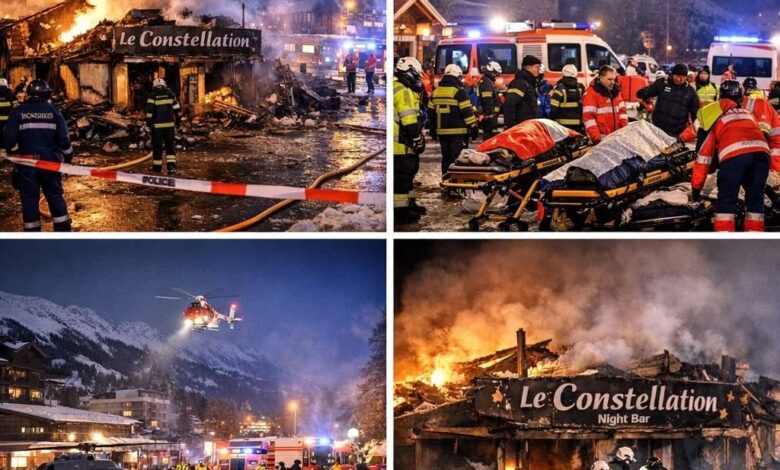
The music didn’t fade. It was cut short by a scream—sharp, panicked, unmistakably human. In the span of a few heartbeats, celebration collapsed into chaos. What had been a carefully staged New Year’s Eve filled with champagne, fireworks, and crowded dance floors turned into a scene of terror as flames tore through Le Constellation, trapping hundreds of revelers inside a space that instantly became lethal.
People had come to Crans-Montana for a pristine alpine countdown—luxury travel, winter tourism, a postcard-perfect resort glowing under snow and lights. They did not come for smoke so thick it erased exits, for heat that stole breath, for a crush of bodies moving in blind panic. In seconds, visibility vanished. Music gave way to coughing, shouting, the dull roar of fire, and the sound of people falling.
Survivors would later describe the same fragments: a wall of heat, darkness swallowing the room, hands grasping for something solid, anything that might lead outside. Some were knocked down and never stood again. Others clawed toward doors they could no longer see, guided only by instinct and the screams around them. The bar’s layout—once a symbol of nightlife design and upscale hospitality—became a maze of death as flames raced faster than people could run.
Outside, the contrast was brutal. Snow-covered streets. Cold mountain air. Sirens slicing through the night. Emergency responders arrived to a scene no amount of training can truly prepare for: injured bodies pulled from smoke, survivors wrapped in blankets, phones ringing unanswered in pockets and bags left behind. The joy of midnight had not even fully arrived before the resort was plunged into mourning.
By morning, the scale of the catastrophe was undeniable. Forty people were dead. More than one hundred were injured, many with severe burns, smoke inhalation, or crush injuries that would require long-term medical care. Hospitals across the region activated emergency protocols, moving patients into intensive care units and calling in additional staff. Trauma surgeons, respiratory specialists, and crisis counselors worked in shifts as families gathered in corridors, searching faces, waiting for names.
As dawn broke over the Alps, the image of Crans-Montana—long associated with luxury ski holidays, exclusive events, and high-end alpine real estate—was irrevocably altered. Charred walls and twisted metal replaced the polished nightlife imagery used to market the resort worldwide. The question on everyone’s lips was the same: how could a night so carefully planned end in such devastating, preventable loss?
Investigators moved methodically through the wreckage, documenting every detail. Fire safety systems. Electrical wiring. Emergency exits. Occupancy limits. Ventilation. Crowd control measures. Each element would be scrutinized under intense public and legal pressure. In disasters like this, the truth rarely hinges on a single spark alone, but on a chain of failures—small decisions that compound until catastrophe becomes inevitable.
Experts in fire prevention and crowd safety note that nightclubs and event venues represent a uniquely high-risk environment. Low lighting, loud music, dense crowds, alcohol consumption, and unfamiliar layouts create conditions where seconds matter. When fire breaks out, panic spreads faster than flames. In such settings, strict enforcement of building codes, fire-resistant materials, functional alarms, and clearly marked exits are not optional—they are lifesaving necessities.
For survivors, the damage extends far beyond physical injuries. Psychological trauma follows close behind. Many will relive the night through flashbacks, nightmares, and survivor’s guilt. Mental health professionals emphasize that post-traumatic stress disorder is common after mass-casualty events, particularly when victims witness loss at close range. Counseling services have been mobilized, but healing will take years, not weeks.
Families of the deceased face a different kind of pain—one defined by absence. Empty chairs. Unanswered messages. A New Year’s countdown forever frozen at the moment their loved ones never returned. In tight-knit communities and international resort towns alike, grief ripples outward, touching workers, tourists, first responders, and residents who may never fully separate celebration from catastrophe again.
The tragedy has reignited broader conversations around public safety, emergency preparedness, and accountability in the hospitality and entertainment industries. Questions about regulatory oversight, enforcement gaps, and profit-driven compromises are now unavoidable. High-end tourism destinations, often associated with exclusivity and prestige, are being reminded that luxury does not equal safety unless rigorously enforced.
Legal analysts anticipate extensive civil litigation alongside criminal investigations, as victims and families seek answers and accountability. Insurance assessments, regulatory reviews, and potential prosecutions will unfold over months, possibly years. Each process aims to determine responsibility, but none can restore what was lost.
Globally, the incident joins a grim list of nightclub and venue fires that have reshaped safety laws and public awareness. History has shown, repeatedly, that meaningful change often follows tragedy—but only if lessons are truly learned and implemented. Fire safety experts stress that memorials and condolences must be matched with reform, investment, and enforcement to prevent history from repeating itself.
For Crans-Montana, the road ahead is uncertain. Tourism economies rely on trust—the belief that visitors will be safe while they relax, celebrate, and spend. Rebuilding that trust will require transparency, accountability, and visible commitment to safety standards that prioritize human life over spectacle.
For those who survived, time will divide life into before and after. For those who didn’t, time stopped altogether in smoke and noise. And for everyone connected to that night, New Year’s Eve will never again be a simple celebration. It will be a reminder of how quickly joy can turn to grief, how fragile safety can be when overlooked, and how silence can follow even the loudest countdown.