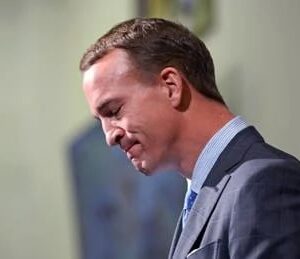
For a few tense minutes, it felt as if the sports world had been blindsided. Posts began circulating at a frantic pace, each more alarming than the last. Social media feeds flooded with dramatic headlines claiming that former NFL quarterback Peyton Manning had been “confirmed” in breaking news out of Colorado. The wording was vague but ominous, and the implication was clear enough to spark immediate panic. Fans paused mid-scroll, unsure whether they were witnessing a tragic moment unfold in real time.
The reaction was swift and emotional. Messages of disbelief and grief began appearing across platforms. People recalled unforgettable games, iconic comebacks, and the precision passing that defined an era of football. For many, Manning was more than a quarterback—he was a symbol of excellence, resilience, and leadership. The thought of losing such a figure, even momentarily, felt like losing a piece of personal history.
But as quickly as the rumor ignited, cracks in the story began to show.
No credible news outlet reported the claim. No statement emerged from Manning’s family, representatives, or the organizations with which he remains connected. There were no official press conferences, no verified reports from law enforcement, and no confirmation from trusted journalists. Instead, the source appeared to be a chain of loosely connected posts repeating the same alarming phrasing without evidence.
Within a short time, the truth became undeniable: the story was false. Peyton Manning was not the subject of any tragic announcement. There had been no confirmed incident in Colorado. The viral posts were nothing more than a hoax—an example of how misinformation can spread rapidly when emotion overrides verification.
The episode highlighted a familiar pattern in the digital age. A headline crafted to shock gains traction because it plays on fear and admiration. The name of a beloved public figure ensures engagement. The ambiguity of the wording leaves room for worst-case assumptions. By the time skepticism sets in, thousands—sometimes millions—have already shared the claim.
Peyton Manning’s career alone explains why such rumors carry so much weight. A two-time Super Bowl champion and one of the most decorated quarterbacks in NFL history, he built a legacy that transcends team loyalties. His years with the Indianapolis Colts and later the Denver Broncos cemented his place among the game’s all-time greats. His meticulous preparation, commanding presence at the line of scrimmage, and unmatched football IQ made him a defining athlete of his generation.
Beyond statistics and championships, Manning cultivated a reputation for professionalism and humility. Teammates frequently praised his leadership. Opponents respected his discipline and preparation. Fans admired not only his talent but also his humor and accessibility in countless interviews and public appearances.
Since retiring from professional football, he has remained active in broadcasting, philanthropy, and business ventures. His involvement in sports media and charitable initiatives has kept him visible and connected to the communities that supported him throughout his playing career. There has been no credible indication of any sudden event or crisis involving him.
The rapid rise and fall of this rumor serves as a case study in modern media dynamics. Information now moves at extraordinary speed. Algorithms reward engagement, not accuracy. A dramatic post can travel across continents before a fact-check ever appears. In moments like this, the emotional response often precedes rational evaluation.
Part of the confusion stems from the way certain posts are crafted. Sensational phrases such as “confirmed as…” or “breaking news” are intentionally left incomplete, prompting readers to click or share before seeking context. The structure encourages speculation. The lack of detail creates urgency. And in the absence of immediate clarification, imaginations fill the gaps.
What ultimately stopped the panic was not a dramatic rebuttal but the simple absence of credible confirmation. Reliable journalism operates differently. Major developments involving public figures are reported by established news organizations with verification from multiple sources. Families issue statements. Representatives provide clarity. Law enforcement confirms incidents when appropriate. None of that occurred here.
Instead, the rumor dissipated as users began questioning its origin. Fact-checkers and responsible commentators pointed out the lack of substantiation. Gradually, the online conversation shifted from alarm to reflection. Many expressed frustration at having been misled. Others acknowledged how quickly they had reacted without verifying the claim.
Peyton Manning remains alive and well. There has been no official report of any tragic event in Colorado or elsewhere. The viral story was entirely fabricated.
While the incident ended without harm to the individual at its center, it underscores a broader issue. Public figures often become targets of false narratives because their names generate attention. A fabricated story about a widely respected athlete spreads more easily than one about an unknown person. The emotional investment fans feel can be exploited for clicks and engagement.
The lesson is not merely about one rumor. It is about the responsibility that accompanies instantaneous communication. Before reacting to dramatic headlines, it is essential to pause. Before sharing a claim, it is crucial to confirm its origin. Trusted news organizations and official statements remain the standard for verifying major developments.
Peyton Manning’s legacy is built on decades of dedication and achievement. It deserves accuracy and respect, not exploitation through unfounded claims. The brief surge of panic surrounding this false report serves as a reminder of how easily misinformation can masquerade as truth in a fast-moving digital landscape.
In the end, nothing had happened—except a demonstration of how quickly fear can spread when fueled by unverified content. The football legend at the center of the storm continues to live his life, unaffected by the baseless headline that briefly unsettled fans worldwide.
And perhaps the most enduring takeaway from the episode is simple: in a world where rumors travel at lightning speed, verification must move just as quickly.