Motorcyclist Finds Abandoned Dog on Bridge with Emotional Note

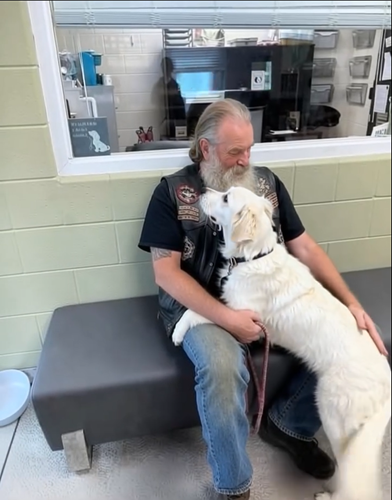
It was well past midnight when I drove past Cedar Creek Bridge. The moonlight was dim, the air cold, and for a moment, I thought I saw something moving in the shadows by the guardrail. I stopped, stepped off my bike, and saw her: a Golden Retriever, thin, weak, trembling with fatigue. She lay curled up, her breathing shallow, a swollen lump on her belly that looked painful. Her fur was dusty, her eyes dull—and yet, there was a spark, a pleading look that said she needed help.

Beside her was a small bowl of water, partly emptied; a stuffed duck toy, matted and torn, its stuffing coming out at one seam; and two handwritten notes. The first note, in neat adult handwriting, said that the family who owned her loved her deeply but could no longer care for her medical needs. It spoke of financial hardship and bad news they could no longer face. The language was mournful, resigned.

Then I saw the second note, and I knelt down, tears welling. In jagged, colorful crayon, a young hand had written: “Please take care of Daisy. I love her so much.” The letter was signed Madison, age 7. Below her message were the words: “This is all I have – $7.43. From the tooth fairy. I believe angels on motorcycles will help Daisy.” The idea of “angels on motorcycles” moved me more than anything—the trust, the hope, the innocence that believed something good would come.

I wrapped Daisy in my jacket, lifted her gently, and rushed to Dr. Amy’s veterinary clinic. The night staff looked worn, but their compassion was immediate. They ran diagnostics: dehydration, infection, and that tumor on her underside. After hours of careful effort, stitches, IV fluids, and quiet patience, Daisy finally pulled through. She wagged her tail—even if just a little—when I whispered to Madison over the phone: “She’s alive.”

Madison’s voice cracked with joy. She asked questions (“Did she eat? Is she warm?”) and I promised to keep her updated. Over the next months, I became part of their fragile universe. I visited often. We cleaned Daisy’s wounds. We picked medicine off shelves, measured doses, adjusted diets. We watched as Daisy regained strength—standing, walking, sniffing the grass, chasing shadows. Madison, too, grew stronger in her own way. She began volunteering at a shelter, whispering stories of Daisy to other children, helping others understand what love means even when you’re afraid.

As time passed, Daisy’s health improved remarkably, though not without setbacks. One week, she battled infection again; another, she limped from an abscess. But each time, Madison would bring a treat, a drawing, some words of encouragement. “You’re so brave,” she would say, placing her small hand gently on Daisy’s side. And Daisy, somehow, seemed to understand.

Then came the day that shook us all. I saw the change early in the morning: Daisy had trouble breathing, her eyes glazed. The tumor had returned in part, or perhaps something new had taken hold. Her breaths were shallow. The lungs rattled. We took her in again. Dr. Amy did everything she could. Madison sat by the window in the clinic, holding my hand, drawing angels on paper, watching as Leah the vet cleaned Daisy’s ears, trimmed her nails, whispering soft words. “It’s okay,” Madison said. “You’re safe now.”

On a cool spring day, Daisy finally slipped away. She was serene, surrounded by people who loved her, in a small garden behind the house I had bought and tended. Flowers—marigolds, daisies, lavender—bloomed around her resting spot. Madison refused to leave; she whispered to Daisy, “Thank you,” and traced the toy duck one last time. I asked her what she saw. “Angels,” she said softly, “took her home.”

Afterwards, Madison gave me a hand‑made drawing: three angels, each with soft wings spread wide. One was labeled “Daisy,” another “Mom,” another “Mr. Bear Angel”—me. Beneath in looping crayon: “Thank you, Mr. Bear Angel, for saving Daisy.” She gave that to me in trembling hands, clutching it close.

Daisy’s passing was a wound in all our hearts. But Madison, even as she grieved, turned sorrow into something sacred. When asked what she wanted to do next, she said: “I want no other dog to suffer alone.” And so, with help from neighbors, riders from a local motorcycle group, and caring veterinarians, she founded **“Daisy’s Angels”—**a charity named in honor of Daisy. In it, children give small savings—coins from their piggy banks, allowances, even tiny tooth‑fairy dollars. Motorcycle riders host bake sales, rides, and benefit concerts. Money goes directly to helping animals who need urgent medical care, rescue operations, spay/neuter, or loving fosters.

So far, Daisy’s Angels has saved seventeen dogs. Some had broken bones, others twisted paws, some just hungry and alone. Each rescue has a story. Each dog that heals adds strength to Madison’s belief: that even one small act of kindness matters.

Years later, when people ask Madison how she found the courage, she says it came from her love for Daisy—and from that note, written in crayon, with her $7.43. “If angels can ride motorcycles and help us,” she says, “they’ll help any dog who needs it.”

This story remains with me, still. It reminds me that compassion isn’t about grand gestures—it’s about showing up, believing in hope, and following through. That at 3 a.m., on a cold bridge, kindness felt like choosing to stop instead of rolling by. And because someone stopped, Daisy felt love again—and Madison found her own voice, louder than grief, stronger than fear.

It was well past midnight when I drove past Cedar Creek Bridge. The moonlight was dim, the air cold, and for a moment, I thought I saw something moving in the shadows by the guardrail. I stopped, stepped off my bike, and saw her: a Golden Retriever, thin, weak, trembling with fatigue. She lay curled up, her breathing shallow, a swollen lump on her belly that looked painful. Her fur was dusty, her eyes dull—and yet, there was a spark, a pleading look that said she needed help.

Beside her was a small bowl of water, partly emptied; a stuffed duck toy, matted and torn, its stuffing coming out at one seam; and two handwritten notes. The first note, in neat adult handwriting, said that the family who owned her loved her deeply but could no longer care for her medical needs. It spoke of financial hardship and bad news they could no longer face. The language was mournful, resigned.

Then I saw the second note, and I knelt down, tears welling. In jagged, colorful crayon, a young hand had written: “Please take care of Daisy. I love her so much.” The letter was signed Madison, age 7. Below her message were the words: “This is all I have – $7.43. From the tooth fairy. I believe angels on motorcycles will help Daisy.” The idea of “angels on motorcycles” moved me more than anything—the trust, the hope, the innocence that believed something good would come.

I wrapped Daisy in my jacket, lifted her gently, and rushed to Dr. Amy’s veterinary clinic. The night staff looked worn, but their compassion was immediate. They ran diagnostics: dehydration, infection, and that tumor on her underside. After hours of careful effort, stitches, IV fluids, and quiet patience, Daisy finally pulled through. She wagged her tail—even if just a little—when I whispered to Madison over the phone: “She’s alive.”

Madison’s voice cracked with joy. She asked questions (“Did she eat? Is she warm?”) and I promised to keep her updated. Over the next months, I became part of their fragile universe. I visited often. We cleaned Daisy’s wounds. We picked medicine off shelves, measured doses, adjusted diets. We watched as Daisy regained strength—standing, walking, sniffing the grass, chasing shadows. Madison, too, grew stronger in her own way. She began volunteering at a shelter, whispering stories of Daisy to other children, helping others understand what love means even when you’re afraid.

As time passed, Daisy’s health improved remarkably, though not without setbacks. One week, she battled infection again; another, she limped from an abscess. But each time, Madison would bring a treat, a drawing, some words of encouragement. “You’re so brave,” she would say, placing her small hand gently on Daisy’s side. And Daisy, somehow, seemed to understand.

Then came the day that shook us all. I saw the change early in the morning: Daisy had trouble breathing, her eyes glazed. The tumor had returned in part, or perhaps something new had taken hold. Her breaths were shallow. The lungs rattled. We took her in again. Dr. Amy did everything she could. Madison sat by the window in the clinic, holding my hand, drawing angels on paper, watching as Leah the vet cleaned Daisy’s ears, trimmed her nails, whispering soft words. “It’s okay,” Madison said. “You’re safe now.”

On a cool spring day, Daisy finally slipped away. She was serene, surrounded by people who loved her, in a small garden behind the house I had bought and tended. Flowers—marigolds, daisies, lavender—bloomed around her resting spot. Madison refused to leave; she whispered to Daisy, “Thank you,” and traced the toy duck one last time. I asked her what she saw. “Angels,” she said softly, “took her home.”

Afterwards, Madison gave me a hand‑made drawing: three angels, each with soft wings spread wide. One was labeled “Daisy,” another “Mom,” another “Mr. Bear Angel”—me. Beneath in looping crayon: “Thank you, Mr. Bear Angel, for saving Daisy.” She gave that to me in trembling hands, clutching it close.

Daisy’s passing was a wound in all our hearts. But Madison, even as she grieved, turned sorrow into something sacred. When asked what she wanted to do next, she said: “I want no other dog to suffer alone.” And so, with help from neighbors, riders from a local motorcycle group, and caring veterinarians, she founded **“Daisy’s Angels”—**a charity named in honor of Daisy. In it, children give small savings—coins from their piggy banks, allowances, even tiny tooth‑fairy dollars. Motorcycle riders host bake sales, rides, and benefit concerts. Money goes directly to helping animals who need urgent medical care, rescue operations, spay/neuter, or loving fosters.

So far, Daisy’s Angels has saved seventeen dogs. Some had broken bones, others twisted paws, some just hungry and alone. Each rescue has a story. Each dog that heals adds strength to Madison’s belief: that even one small act of kindness matters.

Years later, when people ask Madison how she found the courage, she says it came from her love for Daisy—and from that note, written in crayon, with her $7.43. “If angels can ride motorcycles and help us,” she says, “they’ll help any dog who needs it.”

This story remains with me, still. It reminds me that compassion isn’t about grand gestures—it’s about showing up, believing in hope, and following through. That at 3 a.m., on a cold bridge, kindness felt like choosing to stop instead of rolling by. And because someone stopped, Daisy felt love again—and Madison found her own voice, louder than grief, stronger than fear.

Related Posts

13-year-old dies by suicide after bullying – family says cries for help were dismissed as “seeking attention”

The warnings were there. The bruises, the hospital visits, the desperate pleas from a grandmother who refused to leave his side. A 13-year-old boy begged the world…

Heartbreaking facts about the Air Canada pilots who were killed in New York plane crash

They were strangers bound by the same sky. Hours later, they were gone. What happened in those final seconds on the LaGuardia runway has left investigators stunned,…

Pete Hegseth’s awkward reaction as Trump suggests the Iran war was his idea

The moment Donald Trump pointed at Pete Hegseth, the room changed. A smile. A flicker of panic. Then that frozen, haunted stare. In seconds, the U.S. Secretary…

911 call reveals chilling details in tragic death of NHL reporter Jessi Pierce and her children

The sirens came too late. By the time the first neighbors woke, Jessi Pierce’s home was already an inferno, her quiet Minnesota street lit up like a…

SCOTUS Decision On Mail-In Voting Rules Could Impact Elections Going Forward

The clock is ticking, and millions of votes may be on the line. In a single Supreme Court case, the quiet, invisible rules that decide which ballots…

This star became a ’10 year old mom’ to 3 little kids when her mother was ‘gone’

She was told she was garbage. She was beaten, abandoned, molested, and raped. She couldn’t read, bounced through foster homes, and genuinely believed she wouldn’t live past…

Leave a Reply

Your email address will not be published. Required fields are marked *